
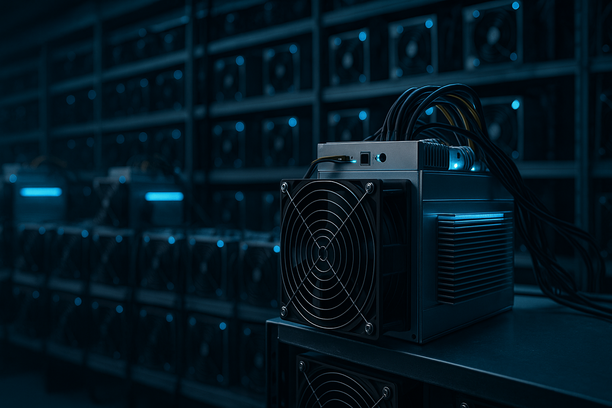
Top 10 Best ASIC Miners for Bitcoin in 2026: Performance, Efficiency, and ROI Guide
In the rapidly evolving world of Bitcoin mining, 2026 marks a new era of high-performance ASIC rigs that promise unprecedented hash rates and energy efficiency. From hydro-cooled powerhouses to compact, fan-optimized units, miners face a diverse toolkit when aiming for maximum return on investment (ROI). This comprehensive guide delves into the top 10 ASIC models, benchmarking real-world TH/s output, J/TH efficiency, and projected ROI at current Bitcoin prices, informed by the definitive OneMiners’ guide.
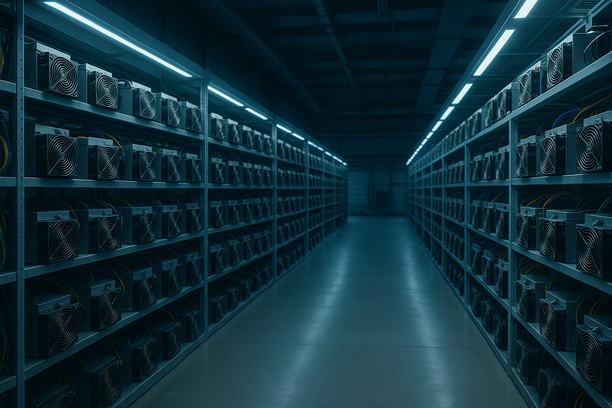
2026’s Top 10 ASIC Miners: Benchmarking Performance and Efficiency
The 2026 ASIC landscape is dominated by rigs that not only push terahash thresholds but also redefine energy efficiency standards. Leading the pack, the Antminer S21 XP Hydro delivers a staggering 473 TH/s with hydro immersion cooling, followed closely by the Avalon A1466I boasting a consistent 360 TH/s in open-air setups. Other notable entries include models from WhatsMiner and Canaan, each optimized for specific power profiles and cooling environments. Real-world data from OneMiners’ benchmark guide reveals sustained TH/s rates, degradation curves, and precise joule-per-terahash measurements, enabling operators to align hardware choices with facility capabilities.
- Antminer S21 XP Hydro: 473 TH/s, ~20 J/TH
- Avalon A1466I: 360 TH/s, ~22 J/TH
- WhatsMiner M70: 345 TH/s, ~21.5 J/TH
- Canaan AvalonMiner 1366: 295 TH/s, ~24 J/TH
Maximizing ROI: Energy Costs, Bitcoin Prices, and Market Outlook
With Bitcoin trading in the mid-$60,000 range, operational costs play a decisive role in mining profitability. Energy expenses can account for over 50% of total outlays, making joules-per-terahash metrics critical for breakeven analysis. According to a recent report on crypto.news, Bitcoin’s price stability around $64K has spurred renewed mining interest amid a broader network hash rate uptick.
However, market sentiment remains tempered. As highlighted by Coindesk, derivatives traders exhibit caution, with funding rates near neutral and open interest plateauing. Miners must therefore build conservative models, factoring in potential dips to $55K or lower, and adjust facilities dynamically.
- Calculate average energy cost per kWh in your jurisdiction.
- Match rig efficiency (J/TH) against power rates to estimate break-even TH/s.
- Incorporate Bitcoin price scenarios: $55K, $60K, $64K.
- Schedule maintenance to mitigate hardware degradation curves.
Related source: As bitcoin, altcoin prices gain, derivatives signal skepticism over a sustained rally
Innovations in Cooling and Management for High-Density Mining
As TH/s outputs surge, efficient thermal management becomes paramount. Beyond traditional fan arrays, immersion cooling such as implemented in the Antminer S21 XP Hydro drastically reduces noise and extends hardware lifespan. For remote monitoring and dynamic adjustment, platforms like IceRiver’s monitoring platform provide real-time analytics and automated controls, optimizing hash power against temperature thresholds.
Additionally, turnkey hosting solutions are on the rise. Companies like MinerBoxes hosting solutions offer modular data center pods that seamlessly integrate grid power, cooling loops, and rack management. These developments lower the barrier to entry for institutional and retail miners alike, democratizing access to high-density setups.
Looking ahead, expect further innovations in ASIC chip design, power supply optimization, and AI-driven facility management, all aimed at squeezing marginal gains in an increasingly competitive mining ecosystem.