
Bitcoin’s 14th Difficulty Cut of 2026 Signals Deepening Miner Margin Squeeze
Bitcoin’s mining difficulty dropped 5% on July 11, sliding from 133.87 trillion to 127.17 trillion at block height 957,600 — the network’s 14th adjustment of the year and a fresh sign that the squeeze on miner economics is far from over. The 6.7 trillion reduction pulls the metric back toward its 2026 low, easing the computational load on remaining miners just as a growing share of the fleet struggles to stay profitable. For operators and hosting clients alike, the reset is less a one-off data point than the latest entry in a pattern that has defined the year: hashrate expands, margins compress, and the network recalibrates.

The Mechanics of the Latest Reset
Bitcoin’s difficulty algorithm retargets every 2,016 blocks to keep average block production near ten minutes. When hashrate falls — as miners power down unprofitable machines or shift capacity elsewhere — blocks slow down, and the next adjustment moves difficulty lower to compensate. That is exactly what played out heading into July 11: block times had been running long enough that a downward correction was widely anticipated by hashrate trackers days in advance.
This is the 14th such adjustment of 2026, and while it is smaller than June’s 10.09% cut to 124.93 trillion — the second-largest downward move of the year — the direction is consistent. Of the adjustments recorded so far in 2026, a majority have landed negative, a pattern that typically reflects sustained pressure on hashprice rather than a single transient event like a regional power outage or a pool going offline.
Why Roughly a Fifth of Miners Are Underwater
The difficulty chart is really a lagging indicator of a more immediate problem: profitability. Hashprice — the daily dollar revenue a miner earns per petahash of computing power — has been sitting in the high-$20s per PH/s, a level industry researchers describe as historically stressed. With bitcoin trading well below the roughly $78,000 average all-in production cost some estimates put on the fleet, and having spent five straight months below that line, an estimated 15-20% of miners are now operating at a loss.
The Puell Multiple, which compares daily coin issuance value to its 365-day average, has fallen to around 0.74 — meaning miners collectively are earning roughly a quarter less than their year-long norm suggests they should. Analysts tracking the space, including Wu Blockchain, have pointed to composite stress indicators hitting new 2026 lows, while capitulation gauges from researchers like Axel Adler Jr. have moved into ranges historically associated with forced shutdowns rather than voluntary curtailment. One visible casualty: mining pool SBI Crypto’s wind-down released an estimated 20,412 PH/s, or roughly 2% of global hashrate, back onto the market.
The AI Pivot Reshaping the Hosting Landscape
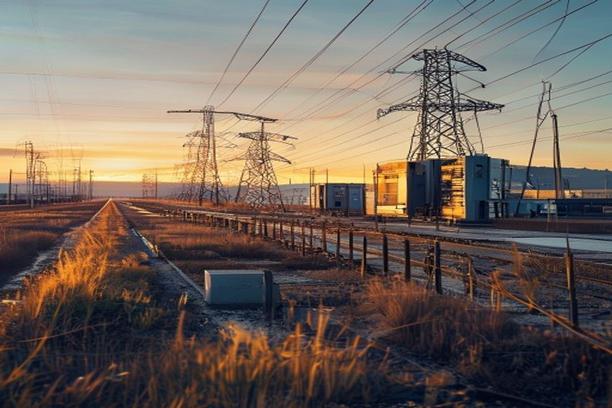
The clearest sign of how miners are responding sits outside the mining ledger entirely. Bitcoin miner TeraWulf’s stock jumped on news of a 20-year, roughly $19 billion lease agreement to provide AI data-center capacity to Anthropic, anchored at a campus in Hawesville, Kentucky, with around 401 megawatts of capacity coming online between late 2027 and early 2028. TeraWulf is also selling a majority stake in a Texas data-center joint venture as part of the same shift in strategy.
Related source: Bitcoin Miner Stress Hits 'Historically Rare' Level as 20% of Miners Operate at a Loss
TeraWulf is not alone. Industry-wide, bitcoin miners have collectively sold more than 15,000 coins and signed upward of $70 billion in AI and high-performance-computing contracts, according to figures cited earlier this year, as operators with power-dense sites recognize that the same infrastructure built for ASICs — substations, cooling, interconnection — has a second buyer willing to pay steadier, contract-backed rates. For hosting providers, the read-through is straightforward: sites with reliable, low-cost power and flexible electrical infrastructure retain optionality that pure-play mining fleets increasingly lack.
Market Backdrop: Bitcoin’s Growing Detachment From Headlines

None of this is unfolding in a price vacuum. Bitcoin has held near $63,800 this week, down just 0.3% over 24 hours but still up roughly 2% on the week — notable given a weekend of renewed U.S.-Iran military strikes that sent oil up 4% and knocked equities and gold lower. Traditional markets braced for a fourth round of Middle East escalation and priced in the risk of higher-for-longer interest rates; bitcoin, by contrast, barely moved.
That relative calm matters for miners because it suggests price is currently being driven more by dollar liquidity conditions and semiconductor-sector sentiment than by geopolitical shocks — a dynamic that keeps hashprice, rather than headline risk, as the dominant variable in near-term profitability planning.
What It Means for Miners and Hosting Clients
For operators running current-generation ASICs on efficient power contracts, a lower difficulty environment paired with a stable-to-firm bitcoin price is a favorable, if narrow, window — marginal cost per terahash falls as the network sheds less efficient competitors. For older or higher-wattage machines, the math is less forgiving: at sub-$30 hashprice, electricity cost per kWh is often the single variable separating a profitable unit from one better redeployed or retired. That reinforces a trend already visible in the data — the fleet is bifurcating between well-hosted, efficient hardware and stranded, uneconomic hardware, with power costs and site flexibility increasingly deciding which side of that line an operator lands on.