

Decoding Crypto Mining’s Energy Appetite: Where the Power Comes From
Bitcoin mining’s massive electricity demands are often cited in debates about sustainability, grid impact, and long-term profitability. According to a detailed OneMiners report, the Bitcoin network now consumes roughly 170–180 terawatt-hours (TWh) each year, representing about 0.7–0.8% of global generation. Yet more than half of that power is sourced from renewables or recovered waste energy, shifting the narrative around crypto’s carbon footprint. This deep dive unpacks where those numbers come from, why “per-transaction” metrics mislead, how cost per kilowatt-hour drives miner decisions, and what the future holds as mining collides with grid stability and efficiency innovations.

Global Electricity Draw of the Bitcoin Network
Estimating crypto mining’s energy use begins with hashing power and network difficulty statistics. As Bitcoin’s difficulty climbed in 2025 and 2026, total hash rate approached new highs, pushing annual consumption into the 170–180 TWh range. By comparison, this parallels the electricity draw of mid-sized nations, equating to roughly 2.5–3 large nuclear power plants operating continuously. While headlines often inflate “per-transaction” figures—since one block contains multiple transactions—focusing on network-wide usage offers a more accurate measure of real-world demand and underlying trends.
The Rise of Renewables in Mining Operations
Historically, miners chased the cheapest grid prices, which meant heavy reliance on coal or natural gas in some regions. However, recent data shows that over 50% of Bitcoin mining energy now comes from renewable or recovered sources. From hydroelectric facilities in Sichuan province during rainy seasons to wind farms in Texas repurposed during oversupply, operators are integrating green power to both cut costs and improve public perception. This isn’t just corporate greenwashing: miners tapping stranded or curtailed renewables can actually stabilize grids by consuming excess generation that would otherwise be wasted.
Regional Power Costs and Profit Margins
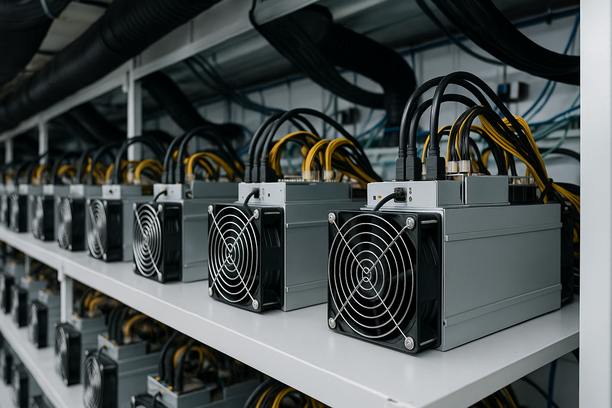
At its core, mining profitability hinges on the cost per kilowatt-hour (kWh). In ultra-competitive markets like Kazakhstan and parts of Russia, power costs can dip below $0.03/kWh, while in Western Europe or Japan, rates often exceed $0.10–0.15/kWh. Miners deploy ASIC miners to maximize hash-per-watt efficiency, shifting capacity dynamically to regions where on-peak prices fall or renewable output spikes. In some locales, favorable pricing stems from regulatory arbitrage; for example, a recent case in Thailand saw authorities crack down on illicit operations after power theft drove cost below market rates.
Future Outlook: Grid Impact and Efficiency Innovations
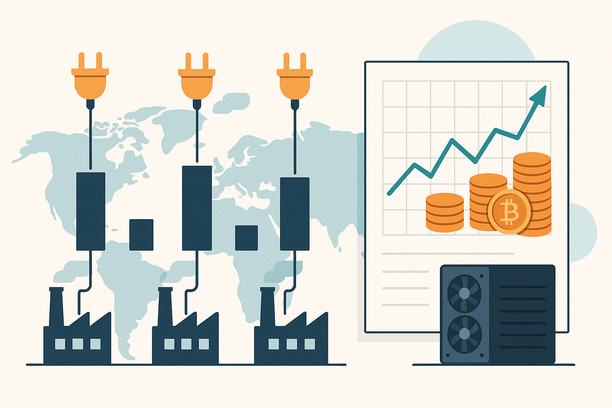
Looking ahead, the industry faces pressure from both regulators and grid operators. A recent BIS report cautions that uneven implementation of crypto mining policies can stress local infrastructure. To address this, miners and utilities are experimenting with demand-response programs, turning rigs on or off in sync with grid needs. Advances in cooling, immersion systems, and more efficient chips promise 10–20% lower power draw per terahash in the next generation of OneMiners analysis. Collectively, these shifts suggest mining’s carbon and grid footprint could shrink, even as hash rates climb—if the focus remains on renewable sourcing and adaptive load management.